Smart Agriculture Solutions: How Technology Is Changing the Way We Grow Food
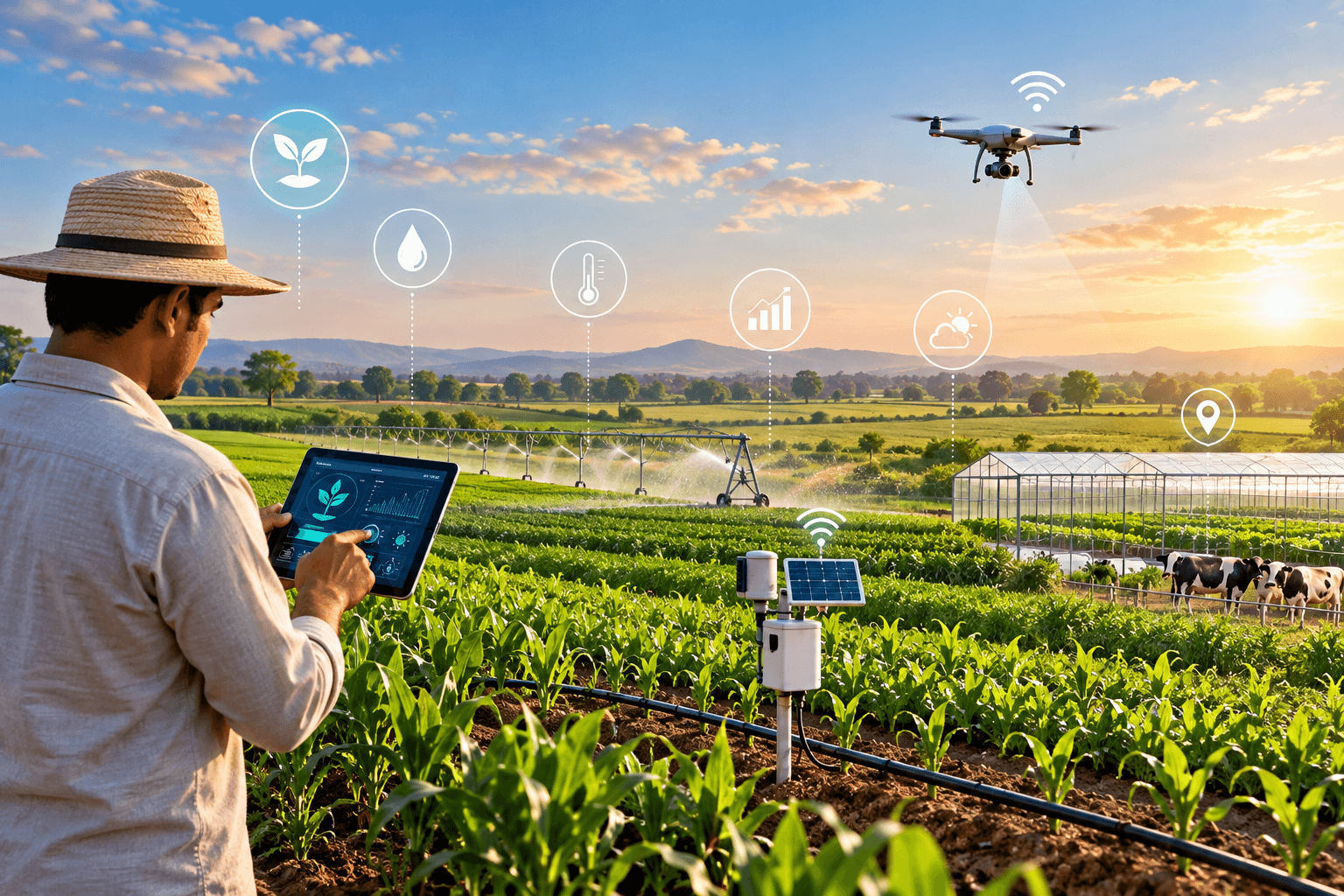
Farming has always meant managing uncertainty: unpredictable weather, pests, soil health, and shifting market prices. Smart agriculture, also called precision farming or AgTech, helps farmers replace guesswork with data. By combining sensors, connectivity, automation, and analytics, it makes it possible to grow more food with fewer resources.
Why Smart Agriculture Matters
Farming is under pressure from every side. The global population keeps growing, arable land is limited, water is getting scarcer, and climate change is making seasons harder to predict. Farmers must produce more while using less water, fertilizer, and energy. Smart solutions help by delivering the right input, in the right amount, at the right place and time.
Key Smart Agriculture Solutions
- IoT soil and crop sensors Field sensors track soil moisture, temperature, pH, and nutrient levels in real time. Farmers can irrigate when and where crops actually need water instead of following a fixed schedule.
- Drones and satellite imaging Drones with multispectral cameras cover large areas quickly and reveal crop stress, pest outbreaks, or irrigation faults before they are visible to the eye. Satellites add a season-long view of field health.
- Precision irrigation Irrigation linked to soil sensors and weather forecasts adjusts water delivery automatically, saving water and energy while avoiding over- and under-watering.
- AI-powered crop health analysis Machine learning and image recognition spot early signs of disease, pests, and nutrient deficiencies, so farmers can act before problems spread.
- Weather data integration Forecasts of temperature, rainfall, and sunlight let farmers plan irrigation, shading, and resource use in advance.
- Precision farming and Variable Rate Technology (VRT) GPS and GIS tools guide planting, irrigation, and harvesting, while VRT adjusts seed, fertilizer, and pesticide amounts to what each part of a field needs.
- Livestock tracking RFID and GPS systems monitor animal location, health, and behavior, with alerts that help prevent losses and improve care.
- Greenhouse and vertical farming automation Automated climate, lighting, and nutrient control allows year-round growing on far less land and water.
- Farm management software and traceability Digital dashboards bring inputs, expenses, labor, and yields into one view, so decisions rest on data rather than memory.
Where Smart Agriculture Is Used
- Agriculture: crop monitoring and smart irrigation for better yield and resource efficiency
- Horticulture: precise cultivation using real-time environmental data
- Aquaculture: monitoring of water quality, feeding patterns, and fish health
- Livestock farming: tracking of animal health, movement, and behavior
- Greenhouse management: automated climate control and irrigation
- AgriTech research: data to support experimentation and new farming techniques
The Benefits
- Higher yields and quality through timely, data-driven decisions
- Lower input costs from efficient use of water, fertilizer, and pesticides
- Less environmental impact through reduced runoff and healthier soil
- Better risk management with early warnings on pests, disease, and weather
- Reduced labor demands as automation handles repetitive or hazardous work
Challenges to Overcome
Upfront costs can be high for smallholders, rural connectivity is often unreliable, and many farmers need training to get full value from new tools. Data ownership and privacy are also growing concerns. Low-cost sensors, pay-per-use models, farmer cooperatives, and subsidy programs are helping close these gaps.
How Optimized Solutions Can Help
Optimized Solutions, an engineering company based in Ahmedabad, India, offers an IoT- and AI-based Smart Agriculture Solutions platform for farms and agri-businesses across India, the USA, Japan, and South Asia. It includes:
- Sensor-based monitoring of soil moisture and nutrients
- Precision irrigation for efficient water use
- Real-time weather integration for climate-adaptive decisions
- AI-driven crop health analysis for early problem detection
- Automated pest detection and targeted treatment
- Livestock tracking using RFID and GPS
- A smart agriculture dashboard that brings the data together in one place
Because the platform spans crop monitoring, precision farming, irrigation management, and livestock tracking, farmers can start in one area and expand as results come in.
Getting Started: A Practical Approach
- Start with your biggest pain point, such as water use, pest losses, or labor costs.
- Pilot on a small plot with one affordable tool, like soil moisture sensors.
- Measure the results against your usual methods.
- Scale what works, adding tools as confidence and returns grow.
The Road Ahead
Farming is becoming more connected, data-informed, and sustainable. As technology gets cheaper and easier to use, smart agriculture will reach smallholders worldwide. The farmers who thrive will combine generations of hands-on knowledge with the insights modern tools provide.
Smart agriculture isn’t about replacing farmers. It’s about giving them better tools to feed the world.

 Custom Electronics

 Digital Transformation
 Test Measurement & Control
 Our Products
 New Product Development
 Build To Print
 Build-to-Spec Custom Electronics
 Learn More
