How Industrial Automation Is Transforming Modern Manufacturing
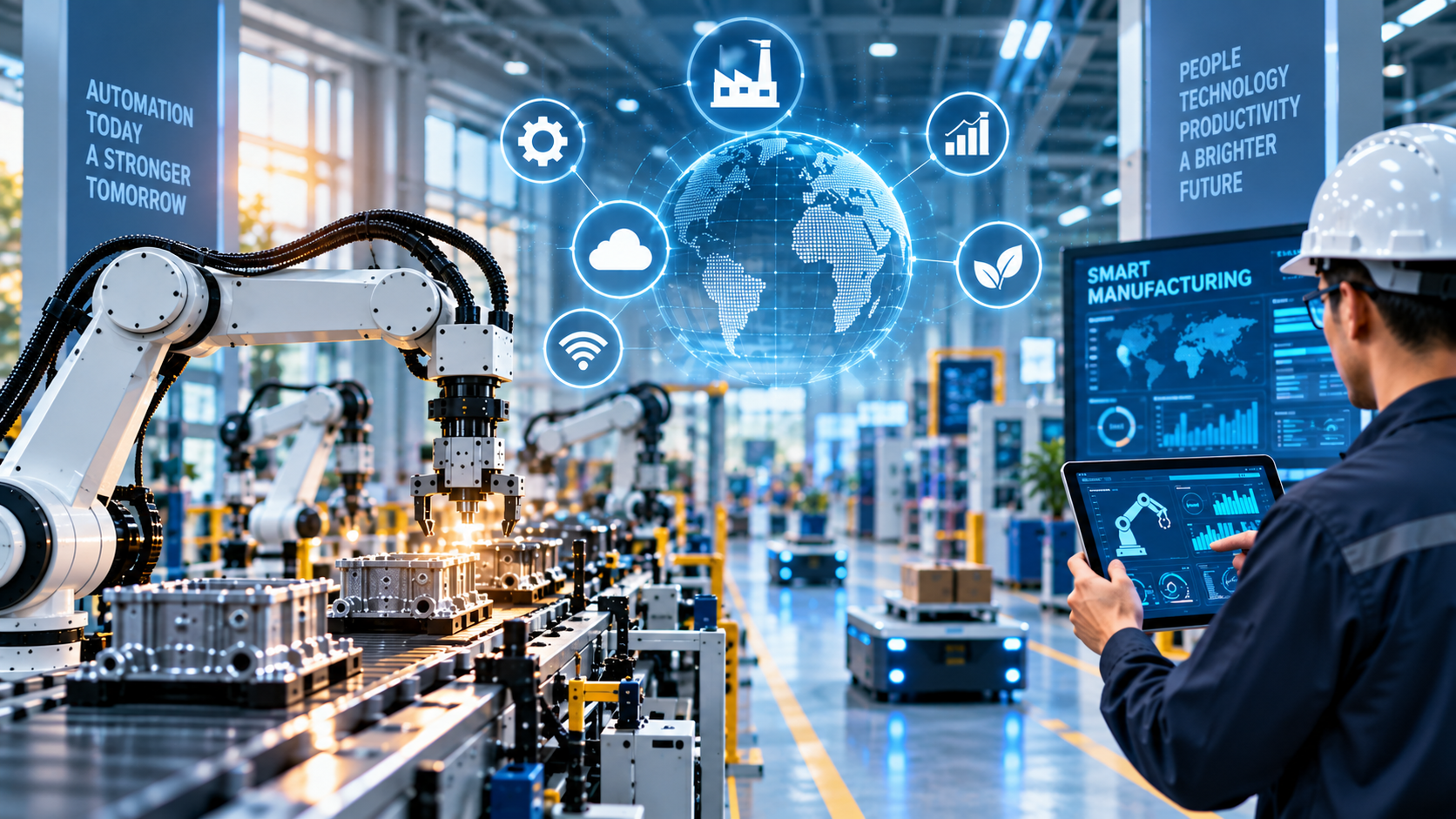
Walk onto a factory floor today, and you’ll see things that would have felt like science fiction a few decades ago. Robotic arms weld with precision, autonomous vehicles move materials between stations, cameras inspect thousands of parts a minute, and dashboards show the health of every machine in real time. Smart factory automation is no longer reserved for automotive giants. It is becoming the foundation of competitive manufacturing across nearly every sector.
This shift goes well beyond replacing manual tasks with machines. Automation is changing how factories are designed, how decisions are made, and what kind of work people do. Here is how.
From Rigid Lines to a Flexible Smart Production Line
Early automation was built for repetition. A traditional assembly line produced one product in huge volumes with minimal variation. It was efficient, but retooling it for a new model could mean weeks of downtime and heavy capital spending.
A modern smart production line flips this logic. Programmable logic controllers (PLCs), modular equipment, and software-defined processes let manufacturers switch between products with minimal disruption. One line can produce multiple variants, and sometimes fully customized items, without stopping.
This matters because markets have changed. Customers expect personalization, product lifecycles are shorter, and demand is harder to predict. Manufacturers who can shift quickly hold a real advantage over those locked into rigid systems.
Robotics: Stronger, Smarter, and Easier to Deploy
Robots are the most visible face of automation, and they have changed dramatically.
Collaborative robots (cobots) work safely alongside people using force-limiting sensors. They are lighter, cheaper, and easier to program than traditional robots, which has opened automation to small and mid-sized manufacturers.
Autonomous mobile robots (AMRs) navigate using onboard sensors and mapping instead of fixed paths. They route around obstacles and adapt to layout changes without dedicated infrastructure.
Vision-guided robotics lets robots pick randomly oriented parts, align components, and handle natural variation in materials, tasks that once needed human eyes and hands.
The result is that automation is less about replacing an entire process and more about applying the right tool to the right task, often step by step. This is why many manufacturers now prefer turnkey automation solutions, where a single partner handles design, integration, commissioning, and support.
Connected Factories: Smart Machine Monitoring and Data Acquisition
If robots are the muscles of modern manufacturing, data is the nervous system. The Industrial Internet of Things (IIoT) connects machines, sensors, and software so equipment can report on its own condition continuously.
A modern smart machine monitoring system can capture spindle temperature, vibration, tool wear, cycle times, and energy consumption from every machine. At the heart of this are reliable data acquisition systems and signal conditioning systems, which collect raw sensor signals, clean them up, and convert them into accurate digital data. Without dependable data acquisition, even the best analytics are guesswork.
This visibility delivers concrete benefits:
- Faster problem detection. Process monitoring systems let teams spot drift as it happens instead of discovering a quality issue at the end of a shift.
- Real-time downtime monitoring. Downtime monitoring shows exactly when, where, and why machines stop, so teams can fix root causes rather than symptoms.
- Automated OEE tracking. Automated OEE tracking systems measure availability, performance, and quality without manual logbooks, giving an honest view of overall equipment effectiveness.
- Every product can be linked to the materials, machines, settings, and operators involved, which is valuable for quality control, compliance, and recalls.
You can’t improve what you can’t measure, and smart production line monitoring makes the factory measurable in ways manual record-keeping never could.
MES and SCADA: The Software Backbone
Hardware alone doesn’t make a smart factory. The software layer ties everything together.
SCADA system integration gives operators a real-time view and control of plant equipment, from pumps and conveyors to furnaces and packaging lines. It supervises what is happening right now on the floor.
MES system implementation sits one level above. A Manufacturing Execution System manages work orders, tracks production progress, records quality data, and connects shop-floor activity with business planning systems. A well-implemented MES system answers questions such as: What are we producing? How much has been completed? Where are the delays? Which batch used which material?
Together, SCADA and MES turn a collection of machines into a coordinated, transparent operation. Business optimization software solutions built on top of this data help management make faster, better-informed decisions.
Smart Inventory: Fixing the Hidden Cost
Inventory is a quiet drain on manufacturing profitability. Too much ties up cash, and too little stops production. Smart inventory management uses barcodes, RFID, sensors, and real-time software to track raw materials, work-in-progress, and finished goods automatically. Automated inventory solutions reduce stock-outs, eliminate manual counting errors, and give planners accurate data to schedule production.
Asset Monitoring and Predictive Maintenance
Unplanned downtime is one of the costliest problems in manufacturing. Real-time asset monitoring solutions track the location, condition, and performance of critical equipment so teams always know what is running, what is idle, and what needs attention.
Building on that, automated equipment health monitoring analyzes vibration, temperature, current, and other signals to detect early signs of wear. Maintenance is scheduled at the right moment, avoiding both surprise breakdowns and unnecessary servicing. The factory moves from reactive repairs to predictive maintenance.
Quality Assurance: End of Line and Automated Testing
Consistency is what customers ultimately judge. End of line testing verifies that every finished product meets specification before it leaves the plant. Automated test equipment performs these checks faster and more repeatably than manual inspection, logging results for full traceability. In electronics, automotive, and industrial equipment manufacturing, automated testing is essential, and the same principle applies to maintenance testing solutions and R&D testing services, where accurate measurement shortens development cycles.
Energy Management and Sustainability
Energy is one of the largest controllable costs in a factory, and sustainability targets are getting stricter.
Real-time industrial IoT energy management tracks consumption machine by machine and line by line, exposing idle loads, inefficient equipment, and peak-demand spikes. IoT-based energy optimization then uses this data to reduce waste automatically. The same approach extends to utility monitoring for water, compressed air, gas, and electricity, and to smart building automation, where IoT-based building energy optimization controls lighting, HVAC, and access for comfort and lower bills.
Precise control also means less scrap and rework, so automation supports sustainability goals directly.
Custom Electronics and Embedded Systems: The Hidden Enablers
Behind every smart machine is electronics and firmware. Off-the-shelf products don’t always fit specialized needs, which is where custom industrial electronics development and embedded hardware development come in. Manufacturers and OEMs increasingly turn to smart products engineering and electronic product engineering services covering circuit design, firmware, prototyping, and prototype testing services.
Depending on the project, these capabilities can be delivered as build to specification or build to print manufacturing. The same engineering discipline supports demanding sectors such as aerospace embedded systems, avionics embedded systems, and defense embedded systems, where reliability and precision are non-negotiable. For heavy industry, heavy engineering automation applies these principles to large, high-load, high-risk equipment and processes.
Cloud and IoT: On-Premise or Azure?
Where should factory data live? An enterprise cloud strategy should balance scalability, security, and latency. Some manufacturers prefer on-premise cloud solutions to keep sensitive production data inside their own network and maintain control. Others choose Azure deployment services for scalability, remote access, and advanced analytics. Many adopt a hybrid approach.
Whichever route you choose, professional IoT solution engineering services ensure devices, gateways, and platforms work together securely and reliably.
The Workforce Question
The fear that machines will eliminate human work is understandable, and some repetitive manual roles are declining. But the fuller picture is more nuanced. Demand is growing for robot technicians, controls engineers, data analysts, and automation programmers. Companies that invest in training and involve their people in the automation journey see smoother adoption and better results. The best factories treat automation as a partnership: machines handle repetitive and hazardous work, while people contribute judgment, problem-solving, and adaptability.
Challenges to Plan For
- Upfront cost and ROI uncertainty. Start with a focused, high-impact use case rather than a factory-wide overhaul.
- Integration complexity. Connecting legacy machines to modern software is often harder than buying new technology. Open standards like OPC UA help.
- Connected equipment must be secured by design, not as an afterthought.
- Skills and change management. Technology only delivers when people are trained and on board.
- Supply chain dependence. Chips, sensors, and specialized components are themselves subject to disruption.
What Comes Next
Expect factories to become more autonomous and adaptive. Generative and agentic AI will simplify programming and troubleshooting. Reshoring will rely on automation to offset labor costs. Software-defined manufacturing will let production capabilities be updated like a smartphone. Even sectors like farming are following this path through smart agriculture solutions and agritech automation, which apply the same sensing, monitoring, and control principles to crops, irrigation, and storage.
Conclusion
Industrial automation is turning manufacturing from a discipline built on fixed lines and manual oversight into one defined by flexibility, data, and intelligence. End-to-end industrial automation, from sensors and embedded electronics to SCADA, MES, and cloud analytics, gives manufacturers the visibility and control they need to compete.
The winners won’t necessarily be those who spend the most, but those who approach automation strategically: solving real problems, integrating thoughtfully, protecting their systems, and investing in their people as much as their machines.

 Custom Electronics
 Digital Transformation
 Test Measurement & Control
 Our Products
 New Product Development
 Build To Print
 Build-to-Spec Custom Electronics
 Learn More